

Abr 21, 2026
There are projects that go beyond renovating a building or modernizing infrastructure.
There are projects that transform the way a city relates to the sea. The new Club de Mar Mallorca belongs to that category.
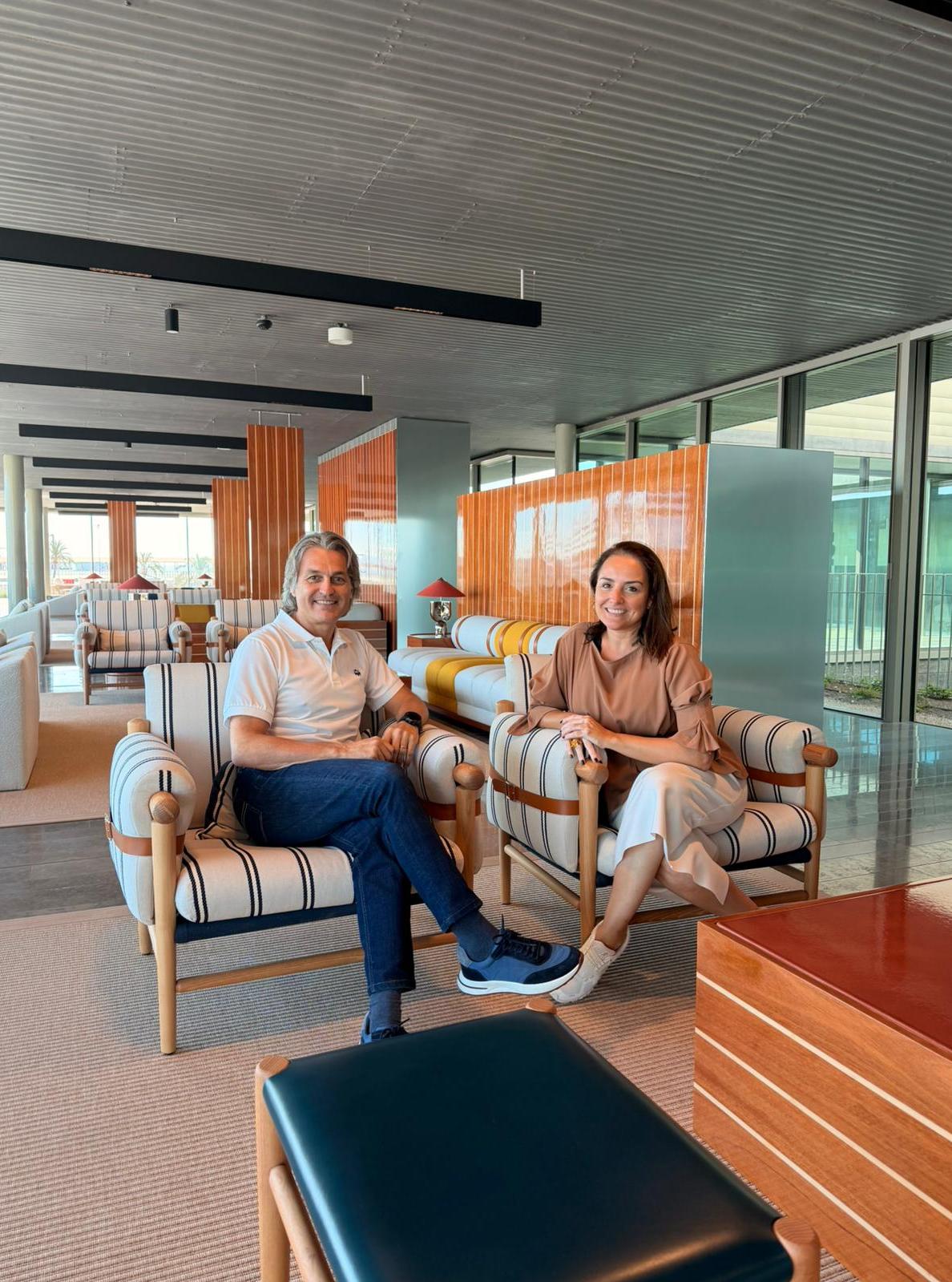
Exclusively for MallorcaSite, we had the opportunity to explore its new facilities alongside José Luis Arrom, the club’s general manager, in a guided visit that allowed us to understand not only the final result, but also the vision that has shaped this transformation over the years.
Photo credit clubdemar-mallorca
What is now presented as a long-awaited reopening began to take shape more than a decade ago, requiring a profound rethinking of concept, scale, and uses. After five years of construction and a lengthy evolution of the project, the new Club de Mar emerges as one of the most significant interventions on Palma’s seafront in recent decades.
The new Club de Mar is not conceived merely as a marina adapted to the current demands of the international nautical sector. Its ambition reaches further. The intervention seeks to redefine the relationship between port and city, opening up new pathways, softening boundaries, and restoring a renewed visual, social, and urban continuity to the Paseo Marítimo.
Throughout the visit, this intention to create something beyond a single building becomes clear. The club has been conceived as a sequence of interconnected spaces, where architecture accompanies movement and the experience evolves as one moves through courtyards, terraces, open areas, transitional zones, and more private settings.
It is not only about arriving, but about moving through it.And it is precisely along this journey that the project reveals its true scale.
The transformation also reflects a shift in era. Club de Mar, founded with a pioneering spirit in the Mediterranean, needed to adapt to a new context—one defined by larger vessels, more demanding services, and a more contemporary vision of the port as a place for meeting, experience, and urban life.
Today, that evolution takes shape in a club that is more open, more permeable, and more connected to Palma, without losing the sense of discretion and refinement that has always defined this institution.
The result repositions Club de Mar within the map of the Mediterranean’s leading marinas, while also contributing something equally significant: a renewed urban energy for this stretch of the Paseo Marítimo.
Photo credit instagram clubdemar-mallorca
One of the most compelling aspects of this new chapter is the role gastronomy will play within the overall concept. Far from being a secondary element, it forms an integral part of the project and its intention to open up to the city.
The new Club de Mar introduces spaces accessible to the public, featuring a carefully curated selection of venues, boutiques, and dining concepts that will bring life to the area throughout the day. Among them, a café seamlessly integrated into the club’s flow, and a Mediterranean-Peruvian inspired restaurant—an especially appealing combination for a setting like this, where the experience of place is as important as the culinary offering.
We also had the opportunity to visit the private members’ area, a part of the club that retains a more reserved character, although certain spaces may, at specific times and upon reservation, open to the public to enjoy the restaurant in a more exclusive setting.
Another aspect that deserves particular attention is the revival of nightlife connected to the sea. In a city like Palma, where the waterfront has historically been one of its main social stages, this reactivation carries a clear significance.
Within this new phase,Mar Salada by Crudo Brasería stands out, marking the return of a space designed to combine dining, terraces, and a vibrant nighttime atmosphere by the port. The expectation is that from June onwards, the full range of offerings will be operating at normal capacity, consolidating a new chapter for this stretch of the Paseo Marítimo.
Photo credit última hora
Its location is particularly well considered. It occupies an independent building, separate from the club’s main structure and with its own parking, allowing this function to operate autonomously without interfering with the internal dynamics of the rest of the facilities. This independence helps to better articulate the different rhythms of the place, both by day and by night.
The intention is clear: to bring life back to Palma’s nights by the sea, without compromising coexistence with the surrounding residential environment.
Beyond the architecture, one of the project’s greatest strengths lies in how it approaches its interior atmosphere and its relationship with the surroundings.
The interior design offers a contemporary interpretation of the classic club—elegant, serene, and carefully balanced—without resorting to obvious gestures. There is a clear intention to modernize without disrupting, to update without erasing the memory of the place. The result is a subtle balance between tradition and present, where each space conveys continuity and coherence.
The landscaping, meanwhile, introduces greenery and a more human scale into what has traditionally been a harder environment, bringing freshness, rhythm, and a more natural connection to the Mediterranean landscape. It is a quiet yet essential intervention that complements the architecture and enhances the experience of moving through the space.
Perhaps the most interesting aspect of the new Club de Mar is that it goes beyond offering improved facilities. It proposes a new way of understanding this enclave—not only as a marina or social club, but as an urban piece, a meeting point, and a new setting for a Palma more open to the sea.
At MallorcaSite, being able to experience this project from within has allowed us to understand that its value lies not only in the investment, the scale, or the architectural renewal. It lies in the vision.
In how an emblematic place in Palma has been reinterpreted to make it more current, more livable, and more connected to the Mediterranean lifestyle that today defines the island.
There are places that cannot be fully understood from the outside.
They need to be experienced..

Boutique Real Estate
C. Illes Balears, 14 – Son Bugadelles
07180 – Santa Ponsa, Mallorca
T.
(+34) 971 712 165
info@mallorcasite.com · mallorcasite.com

Establiment inscrit en el Registre Oficial d'Agents Immobiliaris de le Illes Balears
NÚMERO
DE REGISTRE: GOIBE724048/2024
Members of: